Call Us TODAY: (417) 772-3184
Pool Leaking? Here’s What St. Louis Pool Repair Experts Will Check First
A swimming pool leak can quickly turn from a minor inconvenience into an expensive problem if ignored. If you’re constantly refilling your pool, noticing soggy spots around your backyard, or seeing cracks develop near your pool structure, there’s a good chance your pool is leaking.
For many homeowners in St. Louis, the biggest question is simple: Where is the leak coming from, and how serious is it?
The truth is, pool leaks rarely fix themselves. What starts as a small issue can lead to structural damage, rising water bills, damaged equipment, and costly repairs if left untreated.
At Imber Pool & Outdoor, we help homeowners identify pool leaks early and provide reliable repair solutions that protect their investment. From leak detection to resurfacing and equipment repairs, our team knows exactly what to inspect first.
Suspect a pool leak? Contact us today for professional leak detection and repair solutions before the damage gets worse.
How to Tell If Your Pool Is Actually Leaking
Before assuming there’s a leak, it’s important to understand that some water loss is completely normal.
Pools naturally lose water because of:
- Heat and evaporation
- Wind exposure
- Heavy pool usage
- Splashing
- Filter backwashing
Most pools lose about ¼ to ½ inch of water per day due to evaporation. If your pool is losing more than that consistently, it’s time to investigate.
Common signs of a pool leak:
- Rapid water loss
- Cracks in the pool surface
- Wet spots around the pool deck
- Loose tiles or coping
- Air bubbles in return lines
- Higher-than-normal water bills
- Algae growth from a chemical imbalance
- The pool equipment is losing pressure
If you notice these warning signs, it’s time to contact professional swimming pool repair in St. Louis before the issue becomes more expensive.
What Pool Repair Specialists Check First
Professional pool inspections follow a systematic process to locate leaks quickly and accurately.
Here’s what experts typically inspect first:
Underground Plumbing Lines
Pool plumbing leaks are one of the most common causes of water loss.
Your plumbing system includes:
- Return lines
- Skimmer lines
- Main drain lines
- Suction lines
Over time, pipes may crack, fittings can loosen, or underground pressure issues may develop.
Professionals check for:
- Pressure loss
- Broken pipes
- Underground moisture buildup
- Pipe separation
- Damaged fittings
At Imber Pool & Outdoor, we use advanced leak detection methods to locate plumbing issues without unnecessary excavation whenever possible.
Structural Cracks in the Pool Shell
Cracks in your pool shell can lead to serious water loss.
These cracks may develop due to:
- Soil shifting
- Freeze-thaw cycles
- Aging materials
- Poor installation
- Ground movement
Even small cracks can worsen over time and compromise your pool’s structural integrity.
Professionals inspect:
- Surface cracks
- Structural fractures
- Water seepage
- Weak areas in the pool shell
Working with trusted swimming pool builders in St. Louis prevents future structural issues caused by poor construction.
Skimmer Leaks
Skimmers are a common leak source because they connect different materials and components.
Over time:
- Sealants wear down
- Plastic parts crack
- Concrete may separate
These gaps can allow water to escape.
Professionals inspect:
- Skimmer housing cracks
- Seal failure
- Loose connections
- Separation around the skimmer
Pool Lights and Water Features
Pool lights, waterfalls, and decorative water features can sometimes hide leaks.
Common issues include:
- Damaged gaskets
- Cracked light niches
- Faulty seals
- Water escaping through conduits
These leaks are often difficult for homeowners to identify without professional testing.
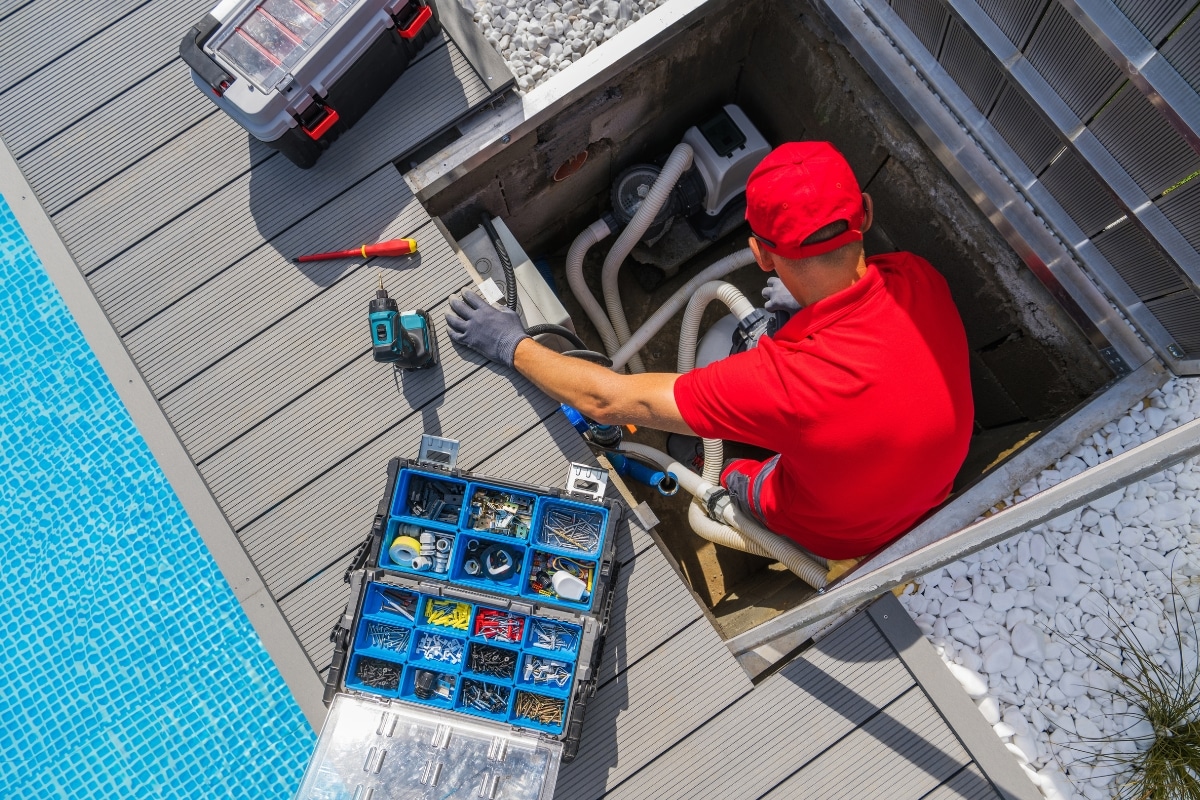
Pool Equipment Problems
Sometimes the leak isn’t inside the pool at all; it’s happening in your equipment system.
We offer repair services for:
- Pumps
- Heaters
- Sand filters
- Cartridge filters
- PVC pipes
- Other pool equipment components
Even small leaks around equipment can waste significant amounts of water over time.
Pool Surface Damage
Surface deterioration can also contribute to leaks.
This includes:
- Worn plaster
- Damaged tile
- Deck cracks
- Aging finishes
In such scenarios, our team also serves:
- Pool resurfacing
- Replastering
- Tile repair
- Deck refinishing
These services help restore both appearance and functionality.
Why Ignoring a Pool Leak Can Cost You More
Many homeowners wait too long to address pool leaks because the issue seems minor.
That delay can lead to:
Structural damage
Leaking water can weaken your pool foundation.
Higher water bills
Constant refilling adds unnecessary costs.
Damaged pool equipment
Low water levels can strain pumps and filtration systems.
Deck deterioration
Leaks can damage the surrounding hardscape.
Landscape erosion
Underground leaks may destabilize your yard.
The longer you wait, the more expensive the repair typically becomes.
Is Repairing a Leaking Pool Worth It?
Yes, in most cases.
Repairing a leak is usually far more affordable than:
- Full pool replacement
- Major structural reconstruction
- Deck replacement
- Backyard restoration
If your pool is structurally sound, repairs can significantly extend its lifespan and save you thousands.
Moreover, if a pool is outdated, many homeowners choose to upgrade while repairing by adding resurfacing, modern finishes, spas, water features, or complete backyard enhancements.
Why local Expertise helps
Local expertise matters because St. Louis pools face real weather swings, seasonal maintenance demands, and long-term wear from climate change. A contractor who understands these conditions can spot problems faster and recommend solutions that fit the property. That is especially useful for owners who want one team they can trust for installation, maintenance, and repairs.
Imber Pool & Outdoor focuses on premium pool solutions that support long-term performance, not just quick fixes. If you are evaluating a pool project, the real question is not only whether the pool looks good today, but whether it will continue to perform well years from now. That is where good planning and expert workmanship pay off.
Don’t Let a Small Pool Leak Turn Into a Major Repair Bill
A leaking pool is never something you should ignore.
The faster you identify the issue, the easier and more affordable it is to fix.
Whether you’re dealing with plumbing leaks, structural cracks, equipment problems, or aging pool surfaces, professional inspection makes all the difference.
At Imber Pool & Outdoor – St. Louis, we help property owners protect their pools, prevent costly damage, and keep their outdoor spaces looking their best year-round.
Schedule your pool inspection today and stop small leaks from turning into major repairs.
Frequently Asked Questions
How can I tell if my pool is leaking or just losing water to evaporation?
Perform the “bucket test.” Place a bucket filled with water on your pool step (weighted down so it sits at the same level as the pool water). Mark the water line on both the inside of the bucket and the pool wall. After 24 hours, if the pool water has dropped significantly more than the water in the bucket, you likely have a leak.
How much does it typically cost to fix a pool leak?
Costs vary depending on the location and complexity of the leak. A simple skimmer repair is vastly different from a subterranean pipe rupture. We provide a detailed assessment once we identify the source, ensuring you know exactly what is being repaired and why.
Does my insurance cover pool leaks?
Generally, standard homeowners’ insurance covers “sudden and accidental” damage (like a pipe burst). It rarely covers “wear and tear,” neglect, or gradual leaks. It is best to check your specific policy, but it is safer to address leaks immediately before they cause structural damage that might be excluded from coverage.
How long does a typical leak detection take?
Most leak detections can be completed within a few hours to a day, depending on the complexity of your plumbing layout. Our goal is to minimize disruption while ensuring 100% accuracy in our findings.
Can I just add water and ignore a slow leak?
We strongly advise against this. A “slow” leak doesn’t just waste water; it causes water to seep into the soil around your pool. This can lead to soil erosion, sinkholes, and structural shifting, which will ultimately cost much more to repair than the initial leak would have.
Does the pool need to be drained to find a leak?
Not always. In many cases, we can utilize dye testing, cameras, and pressure tests to locate leaks while the pool remains full. If the leak is in the structure or deep plumbing, we will determine the best course of action based on the findings.
Is a brand-new pool really better than repairing an old one?
If your pool requires extensive structural work, upgrading to a new, modern, energy-efficient build often provides a better return on investment. New pools offer advanced automation, better filtration, and modern finishes that reduce long-term maintenance costs compared to patching a pool that has reached the end of its lifespan.