Call Us TODAY: (417) 772-3184
Can You Install a Fiberglass Pool on a Sloped Backyard in St. Louis?
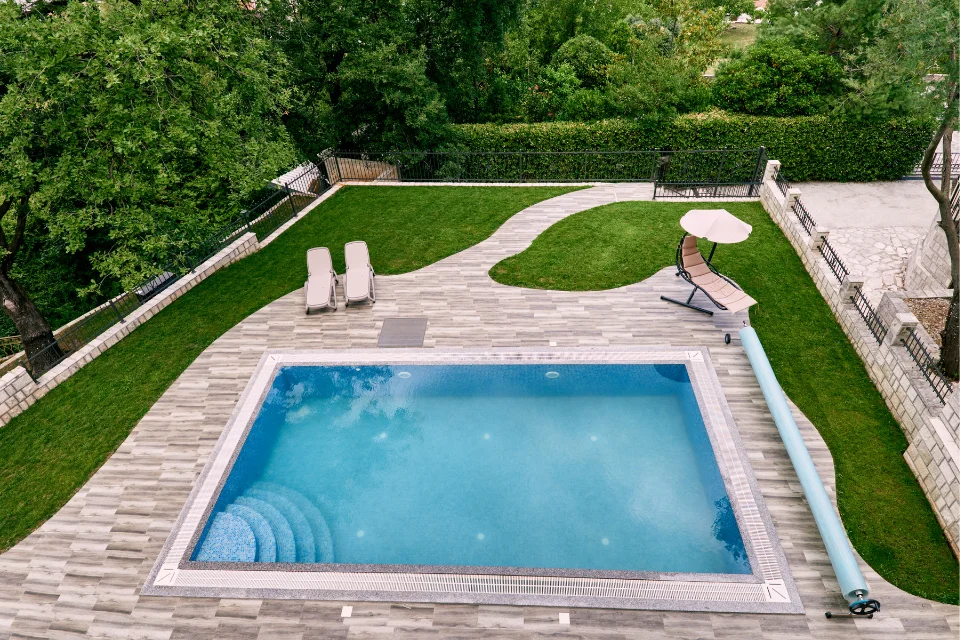
A sloping backyard can make a swimming pool feel out of reach. Perhaps your lawn drops away from the patio or rainwater rushes toward the fence. Neither issue automatically rules out a fiberglass pool. An awkward yard may still become a summer retreat.
The real question is how to support a level pool, manage water, and create a comfortable surrounding space. Imber Pool & Outdoor helps homeowners explore pool designs that suit their properties and outdoor living goals.
Can a Fiberglass Pool Be Installed on Uneven Ground?
Yes, a fiberglass pool can often be installed in a sloped backyard, but the pool itself must sit level on a properly prepared base. Grading, retaining walls, or drainage improvements may be needed, depending on soil, space, and equipment access.
Gentle slopes may need modest preparation; steep or unstable sites may require engineering. Some proposed locations may prove impractical, which is why an on-site review matters. Safe access from the house also matters.
Why a Site Assessment Comes First
Before selecting a shell, a fiberglass pool installer in St. Louis should examine more than the open lawn.
Slope and elevation. Changes in elevation around patios and structures determine grading needs.
Soil and ground conditions. Fill, rock, and wet or unstable ground affect preparation and may require engineering review.
Drainage and utilities. Runoff, buried utilities, and the home’s position influence placement.
Access and local requirements. Shell delivery access, setbacks, permits, and neighborhood rules must be considered.
Imber Pool & Outdoor offers in-home consultations with measurements and 3D designs to help visualize the finished space.
How Grading Creates a Suitable Pool Area
Grading means reshaping the ground to achieve the elevations needed for construction. In a sloped yard, this may involve removing soil from a higher section, building up a lower section with properly compacted material, or both. The aim is a stable installation area, not necessarily a flat entire backyard. Cut-and-fill decisions should also account for the quality of the excavated soil and the space available to support a finished deck.
A fiberglass pool is a manufactured shell, so its supporting base must be prepared according to the shell manufacturer’s requirements and the project design. Backfill and decking also need proper support; loose soil beneath a shell is no shortcut.
Steps or separate outdoor levels may connect the pool deck with the home more naturally than flattening everything.
When Would a Retaining Wall Be Necessary?
A retaining wall holds back soil where the ground changes elevation. It may be needed beside a steep excavation or where there is insufficient room for a gradual slope.
Not every sloped-yard pool needs a retaining wall. When necessary, its location, foundation, and drainage require appropriate design and potentially structural engineering. A retaining wall is not a substitute for proper pool-shell support.
Walls can also become part of the backyard’s appearance. Terraced planting can look appealing, but safety and water management come first. Ask whether wall construction is included in the quote.
Why Drainage Matters Around a Hillside Pool
Rainwater moves downhill, potentially carrying runoff from lawns or landscaping toward the pool. Unmanaged water may pool on decking, erode soil, or increase ground pressure.
Drainage planning identifies a safe route for surface runoff. Depending on the site, measures might include regrading, surface drains, or subsurface drainage provisions. Any retaining wall also needs appropriate drainage details.
Groundwater is a separate concern. If excavation reveals persistent water or conditions that could affect the shell, the installation plan must address them using appropriate professional guidance. Water should move away safely, not collect near the pool. Drainage outlets must also be planned carefully so redirected runoff does not create problems for the house or neighboring properties.
Choosing a Fiberglass Pool That Works With the Slope
Pool selection should reflect usable space and family needs. Imber Pool & Outdoor lists fiberglass models commonly ranging from 12 to 16 feet wide and 30 to 40 feet long, with a variety of depths. Shell options include built-in seating, tanning ledges, safety ledges, and lighting.
Placement that limits excavation may preserve room for decking, seating, or landscaping. Proximity to the house also depends on elevations and drainage.
Compare manufactured shell dimensions with actual site measurements before deciding. Seating and tanning ledges may offer extra places to relax without demanding a completely separate patio area.
What Will Affect the Project Cost and Schedule?
A sloped backyard does not have one standard installation price. The quote can change based on excavation, soil removal, imported fill, engineered walls, drainage work, equipment access, decking, and permitting. Weather and site complexity also affect timing.
Fiberglass shells can offer a shorter installation process than pools built entirely on site, but challenging terrain may add steps before the shell can be placed. A site-specific estimate clarifies preparation costs.
Compare proposals for grading, drainage, and restoration, not just the total price. Also confirm which work depends on permit approval or additional engineering findings.
Plan Your Backyard With Imber Pool & Outdoor
Homeowners looking for a fiberglass pool installer in St. Louis need more than a shell that looks appealing in a catalog. They need a design that considers the house, grade, intended pool use, and surrounding outdoor space.
Imber Pool & Outdoor – St Louis offers fiberglass pool installation alongside pool and outdoor design services. Its St. Louis team discusses project goals and budgets, develops designs, and offers 3D visualizations before construction. The company also works on features such as outdoor kitchens, fire features, and other elements that can complement a poolscape.
That integrated design approach is useful on uneven lots. The overall design should fit the property and budget.
Frequently Asked Questions
Can a fiberglass pool be installed without leveling my entire backyard?
Often, yes. The pool requires a level, properly supported installation area, but the rest of the yard may retain its natural slope. Steps or terracing can connect levels. The exact layout depends on available yard space and how the pool deck connects to existing entrances.
Do all sloped yards in St. Louis need retaining walls?
No. A retaining wall is only one potential solution. It depends on grade, space, and ground conditions. Your installer should explain the proposed soil support method before construction starts.
Will heavy rain affect a fiberglass pool on a slope?
Heavy rain makes effective drainage especially important. Surface runoff and groundwater need to be considered during planning. Drainage helps protect the surrounding area. A plan should consider both rainfall flowing over the surface and water found below ground.
Can I install a pool if my backyard slopes toward my house?
It may be possible, but the drainage plan must prevent runoff from being directed toward the home. A site review can assess feasibility and help identify a location that protects the home while allowing convenient access.
How do I find out whether my St. Louis property is suitable?
Start with a consultation and accurate backyard measurements. Imber Pool & Outdoor can discuss possible pool layouts and provide a free quote, with any additional technical assessment determined by site conditions.
A Sloped Yard Could Still Become Your Favorite Place to Gather
Uneven land does not automatically rule out a swimming pool. Proper assessment, grading, and drainage can make many sloped sites workable. The first step is understanding what your particular yard needs.
If you are searching for a fiberglass pool installer in St. Louis, speak with Imber Pool & Outdoor about your plans. Explore fiberglass pool options, discuss the terrain, and request a estimate for your backyard project.