Call Us TODAY: (417) 772-3184
What to Do After Detecting a Leak in Your Inground Pool?
A rapid drop in your pool’s water level might indicate a leak. A leak in your inground pool can waste thousands of gallons of water, increase utility bills, and damage the surrounding area, potentially costing you hundreds or even thousands of dollars. Ignoring a leak leads to costly repairs beyond the pool repair. The leaked water can soak in the surrounding area and damage that section. Acting fast is your only option to save money and prevent further complications. Spotting a leak is just the first step—fixing it the right way ensures you can enjoy the pool year after year. Once you’ve confirmed a leak in your inground pool, here’s what to do.
Steps to Take After Confirming a Leak in Your Inground Pool
1. Confirm the Leak
Not every drop of water loss means a leak. Evaporation, splashing, and backwashing also reduce water levels. Use the bucket test to check:
- Fill a bucket with pool water and place it on a pool step.
- Mark water levels inside and outside the bucket.
- Wait 24 hours. A leak is likely if the pool loses more water than the bucket.
2. Locate the Source
A leak can occur in multiple areas, including:
- Plumbing system – Underground pipes may crack or loosen.
- Pool shell – Cracks in concrete or liner tears cause water loss.
- Pool equipment – Inspect the pump, filter, and heater for drips.
- Fittings and skimmers – Loose connections can lead to leaks.
- Use food coloring near suspected areas. If the dye gets pulled in, you’ve found the leak.
3. Assess the Severity
Some leaks need quick fixes, while others require professional help. For instance, minor liner tears or cracks, which could be as small as a few inches, can be patched, but extensive plumbing damage or structural issues demand extensive repairs. If you plan to add a new inground pool to your backyard, you can contact an inground pool installation company for assistance.
4. Temporary Fixes to Prevent Further Damage
Before scheduling repairs, slow water loss with these methods:
- Pool putty or sealant – Ideal for small cracks.
- Waterproof tape – Works temporarily for minor liner tears.
- Shutting off affected pipes – If plumbing leaks are the issue, bypassing the affected area reduces water loss.
5. Call a Pool Professional
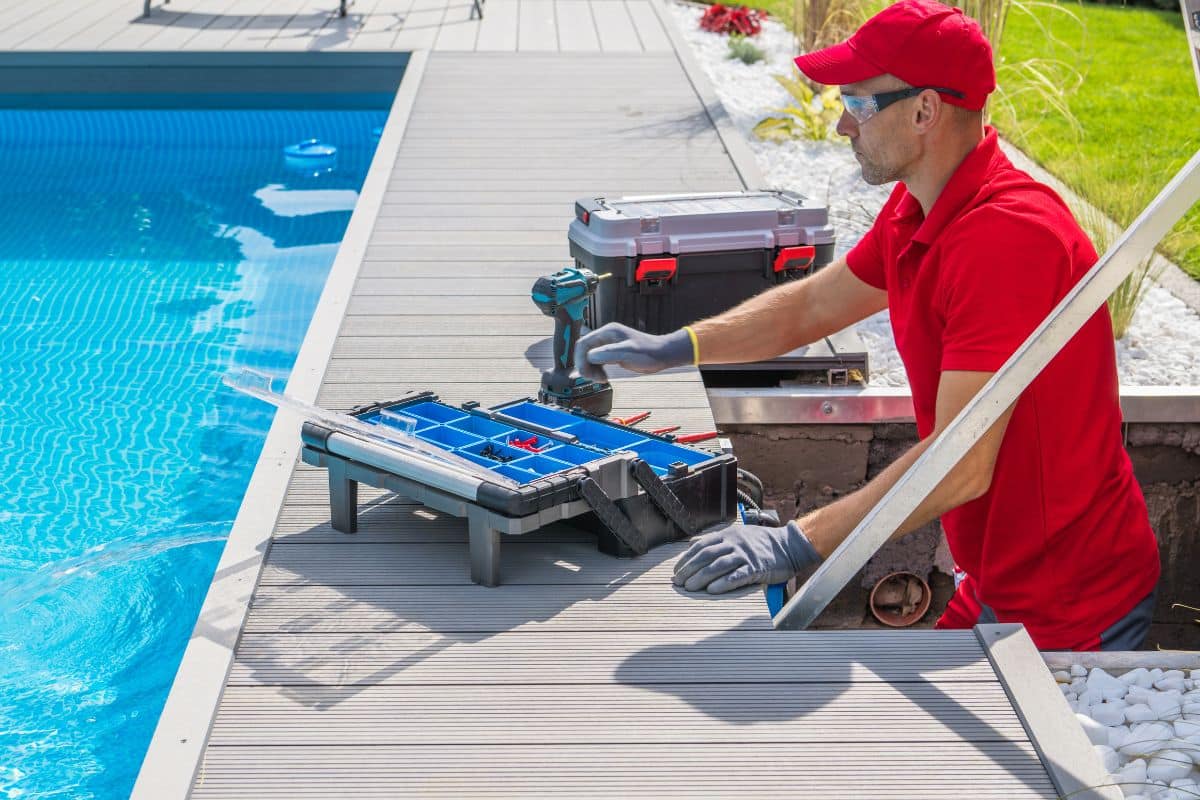
If the leak is beyond DIY repair, remember that you’re not alone. Call a licensed pool technician for professional support. They use pressure testing, sonar, and specialized cameras to pinpoint leaks, guiding you through the process. Early intervention prevents costly long-term damage.
6. Repair the Leak
Fixing a leak depends on its location:
- Liner leaks – Vinyl patch kits seal small tears. Significant damage may require a liner replacement.
- Cracks in concrete – Epoxy or hydraulic cement repairs minor cracks. Structural issues need resurfacing.
- Plumbing leaks – Professionals replace damaged pipes or fittings.
- Skimmer and return leaks – Re-sealing with pool putty often works. Severe cases need replacement.
7. Monitor Water Levels After Repairs
After fixing the leak, check water levels for a few days. If the pool still loses water, another leak might be present. Keeping an eye on water loss ensures the issue is fully resolved.
8. Prevent Future Leaks
59% of households in the U.S. come with inground pools. Routine maintenance is the only way to keep leaks from recurring. Essential steps include:
- Regularly inspect pool equipment for wear and tear.
- Maintain proper water chemistry to prevent corrosion and liner degradation.
- Check for cracks and weak spots in the pool shell.
- Monitor landscaping to avoid tree roots damaging underground pipes.
- Schedule annual professional inspections to catch early signs of leaks.
A leak in your inground pool wastes water and leads to costly repairs. Ignoring a leak can lead to more serious issues such as structural damage or health hazards. Identifying the issue early prevents significant damage. Simple fixes work for minor leaks, but serious ones require professional help. Regular maintenance keeps your pool in top condition and prevents future leaks. Need professional assistance? Contact a trusted pool specialist today to safeguard your investment.